
Technique
Puerto Rican Coffee Roast and Grind: A Practical Brewing Matrix
Connect light, medium and dark roast with grind, brewing method, water and flavor instead of vague labels.
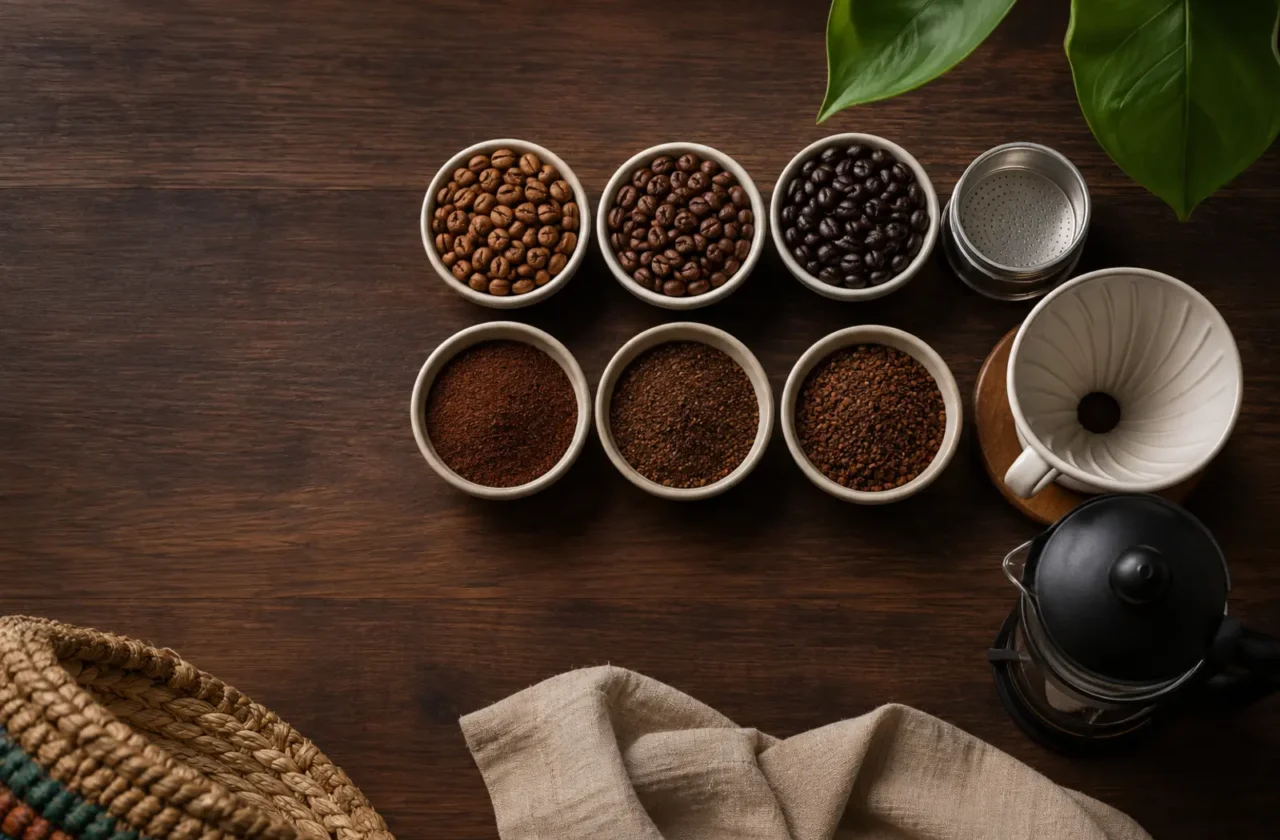
Roast and grind are not separate decisions. Together they determine how much material water can extract and how quickly. Dark finely ground coffee behaves differently from light coarsely ground coffee in the same brewer. Understanding that relationship improves results more than chasing equipment brands.
What changes during roasting
Light roasts often preserve more perceived acidity and origin characteristics. Medium coffee balances sweetness, aroma and body. Dark roasts develop flavors of roasting, intense chocolate or smoke and are generally more soluble. Categories are not universal: one roaster’s medium may look dark beside another.
Grind controls surface area
Fine means more surface and faster extraction; coarse means less surface and slower extraction. Espresso needs fine coffee because contact is brief. French press uses coarse grounds because water remains for minutes. Moka pots generally work with medium-fine coffee that is not tamped.
A practical matrix
- Espresso: fine, 25–35 seconds as a reference, adjusted by taste.
- Moka pot: medium-fine, moderate heat, stop before prolonged sputtering.
- Filter: medium, steady flow over several minutes.
- French press: coarse, approximately four minutes before plunging.
- Cold brew: coarse, twelve to eighteen cold hours.
Diagnose through flavor
Sour, thin and short coffee may be underextracted: try finer grind, more time or higher temperature. Dry, bitter and persistent coffee may be overextracted: try coarser grind, less time or lower temperature. Do not blame everything on roast.
Water and ratio
Correct grind still fails with strong-smelling water or random ratios. Begin around 60 grams per liter for filter coffee and record changes. For moka pot and espresso, follow equipment capacity and weigh when possible.
Buy intentionally
Ask for roast date, origin, level and grind recommendation. When buying ground coffee, name the exact method. “For a coffee maker” can mean several things.
Practice with the simple tasting guide and record adjustments in the Coffee Passport.