
Practical guide
How to Taste Coffee Without Turning It into a Competition
A straightforward way to notice aroma, acidity, body and finish.
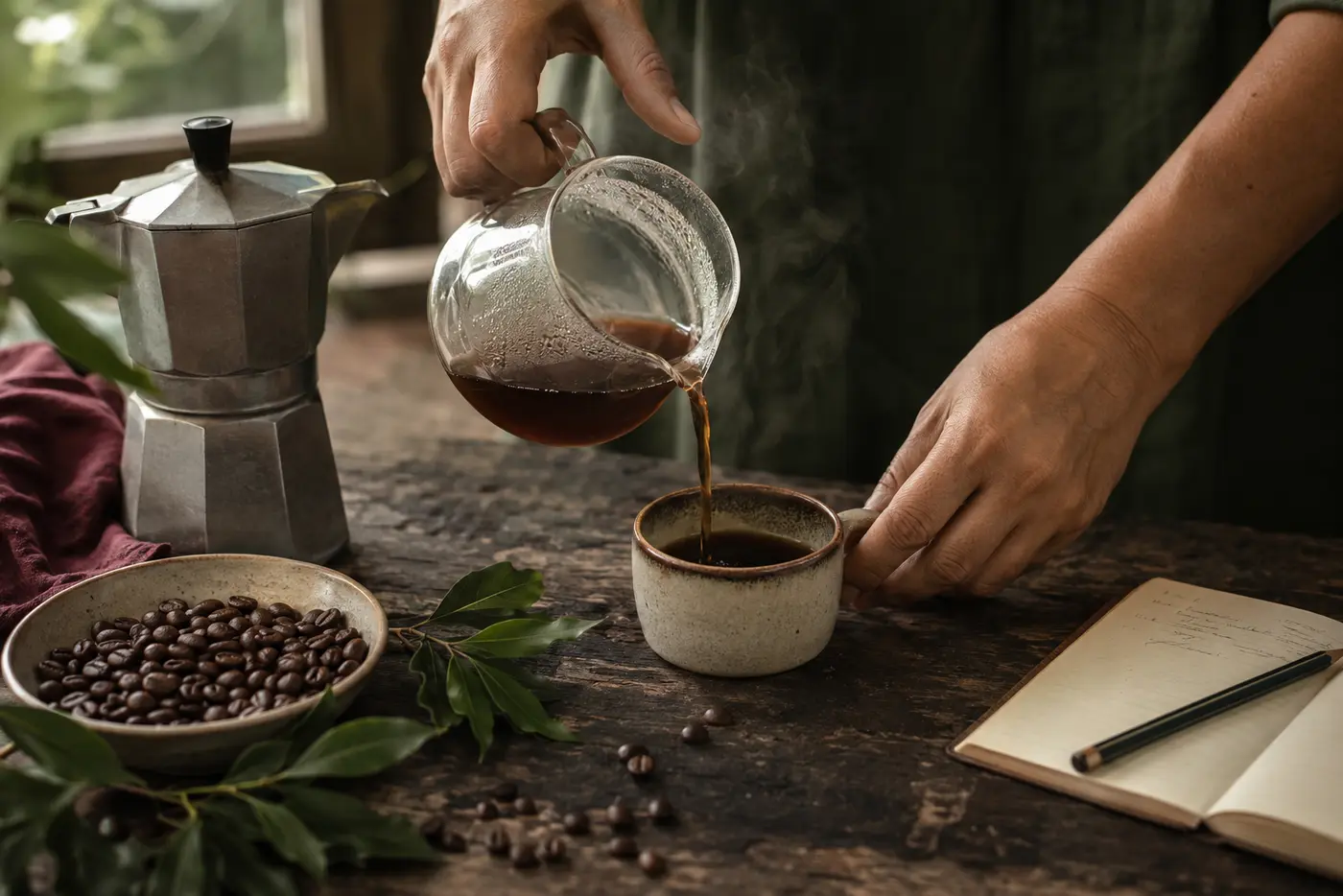
Tasting does not mean performing vocabulary. It means paying attention in an organized way. You can do it at a farm, a coffee shop or in your kitchen without specialized equipment. The goal is not guessing a correct answer but building sensory memory.
Begin with aroma
Smell the dry coffee and return after adding water. Ask whether the impression reminds you of chocolate, nuts, fruit, spices, caramel or wood. An approximate comparison is more useful than an elegant word carrying no personal meaning.
Notice balance
Acidity is not automatically a defect; it may feel like liveliness. Sweetness can suggest brown sugar, honey or ripe fruit. Body describes weight and texture. Finish is what remains after swallowing.
Control variables
If comparing two coffees, use the same water ratio, temperature, grind and method. Changing everything at once turns comparison into guesswork. Let coffee cool, because certain flavors become clearer at lower temperatures.
Write a little, but write
Record the date, coffee, method and three impressions. The Coffee Passport includes pages designed for this practice. After several cups, you will begin recognizing personal patterns without memorizing a flavor wheel.