
From origin
From Cherry to Cup: How Coffee Is Processed in Puerto Rico
Harvesting, pulping, fermentation, drying, milling, roasting and brewing explained without skipping steps.
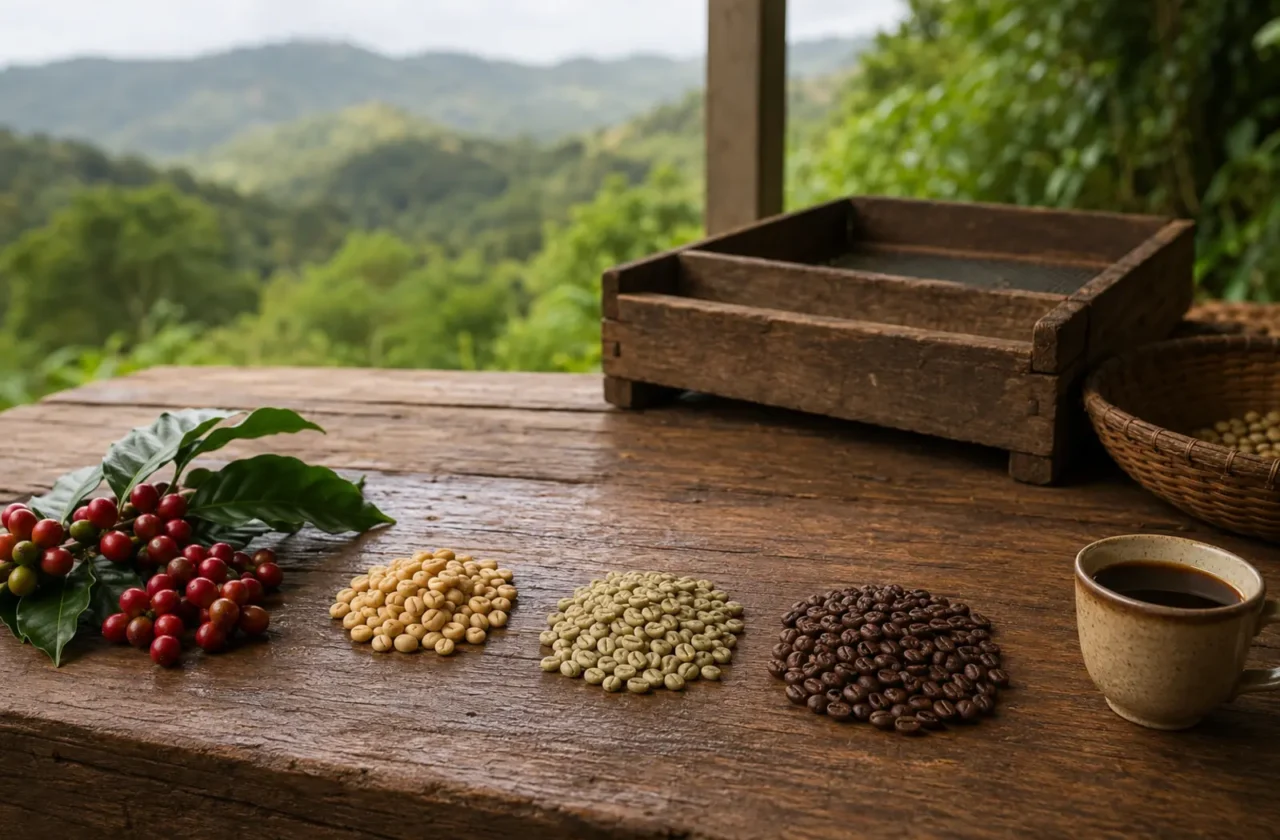
The phrase “farm to cup” compresses months of decisions into three words. Between a red cherry and a finished beverage are harvesting, sorting, pulping or whole-fruit drying, fermentation, washing, final drying, storage, milling, grading, roasting, resting, grinding and brewing. Each stage can preserve or destroy earlier work.
Harvest maturity, not merely color
Cherries do not ripen on one day. Selective picking separates mature fruit from green, dry or damaged cherries. On mountain land, this work requires walking slopes and returning to the same lot multiple times.
Washed, natural and honey processes
Washed coffee has pulp removed, mucilage fermented and washed before drying. Natural coffee dries inside the complete fruit. Honey removes skin while retaining some mucilage. No method guarantees quality by itself; cleanliness, control and uniform drying remain essential.
Drying and moisture
Coffee must lose moisture slowly to a stable range. Drying too quickly can create defects, while storing coffee too wet increases deterioration risk. Patios, raised beds and mechanical dryers respond to scale and climate.
Resting, milling and grading
Dry parchment protects the seed during rest. It is later hulled, graded for size, density and defects, then prepared for sale or roasting. Green coffee does not yet carry the aroma associated with a café.
Roasting as transformation
Heat develops hundreds of aromatic compounds, reduces mass and makes beans brittle. Roasters balance energy and time according to density, moisture and purpose. Dark roasting does not automatically correct agricultural defects; it may hide them along with origin qualities.
Grinding and brewing
After roasting, coffee releases gas. Grinding increases surface area and accelerates aroma loss. Finally water, temperature, time and ratio determine what reaches the cup.
Questions during a tour
Ask which process the farm uses, how it dries coffee, whether it grows everything sold under its name and which months correspond to harvest. Concrete answers teach more than repeating words like artisanal or premium.
Find visits in the verified coffee farm directory and learn to taste the results.