Buying guide
How to Read a Puerto Rican Coffee Label
Origin, roast, grind and freshness: the words that matter before buying.
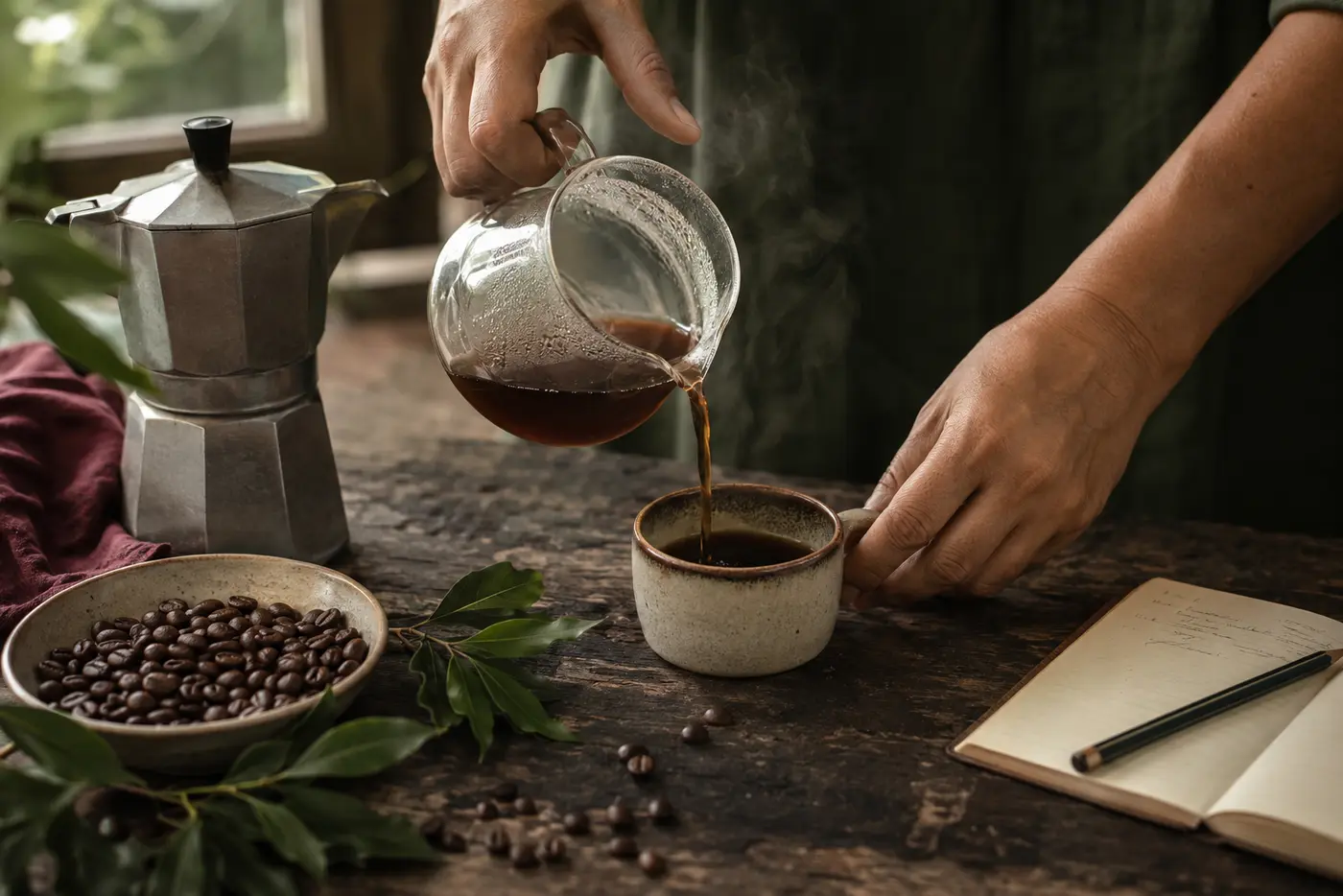
A bag can communicate tradition, landscape and cultural pride without answering the question that matters most to certain buyers: where were the beans grown? Reading carefully helps you buy according to your priorities, whether that means supporting local agriculture, finding a flavor profile or simply brewing a consistent cup.
Origin is not the same as roasting location
“Roasted in Puerto Rico” describes one processing stage. “Puerto Rico coffee” may function as a commercial identity. If agricultural origin matters, look for a direct statement about growing location or ask the roaster. Never fill in with imagination what the package does not claim.
Roast date and level
A roast date is generally more informative than an expiration date, particularly for whole beans. Roast level offers orientation but is not a universal scale: one company’s medium may look dark beside another company’s medium.
Whole bean or ground
Whole beans preserve aroma better before brewing but require a grinder. When buying ground coffee, choose a grind suited to a moka pot, espresso, filter or French press. The wrong grind can produce weak or bitter results even with excellent coffee.
Comparable price
Compare net weight and calculate price per ounce. Include shipping when buying outside the island. A small bag can appear inexpensive until compared with larger formats.
See our coffee brand guide and online buying guide.