Creative guide · 5 min
How to Photograph Coffee Shops and Coffee Farms Respectfully
A responsible photography guide for coffee, people and landscape without interrupting work.
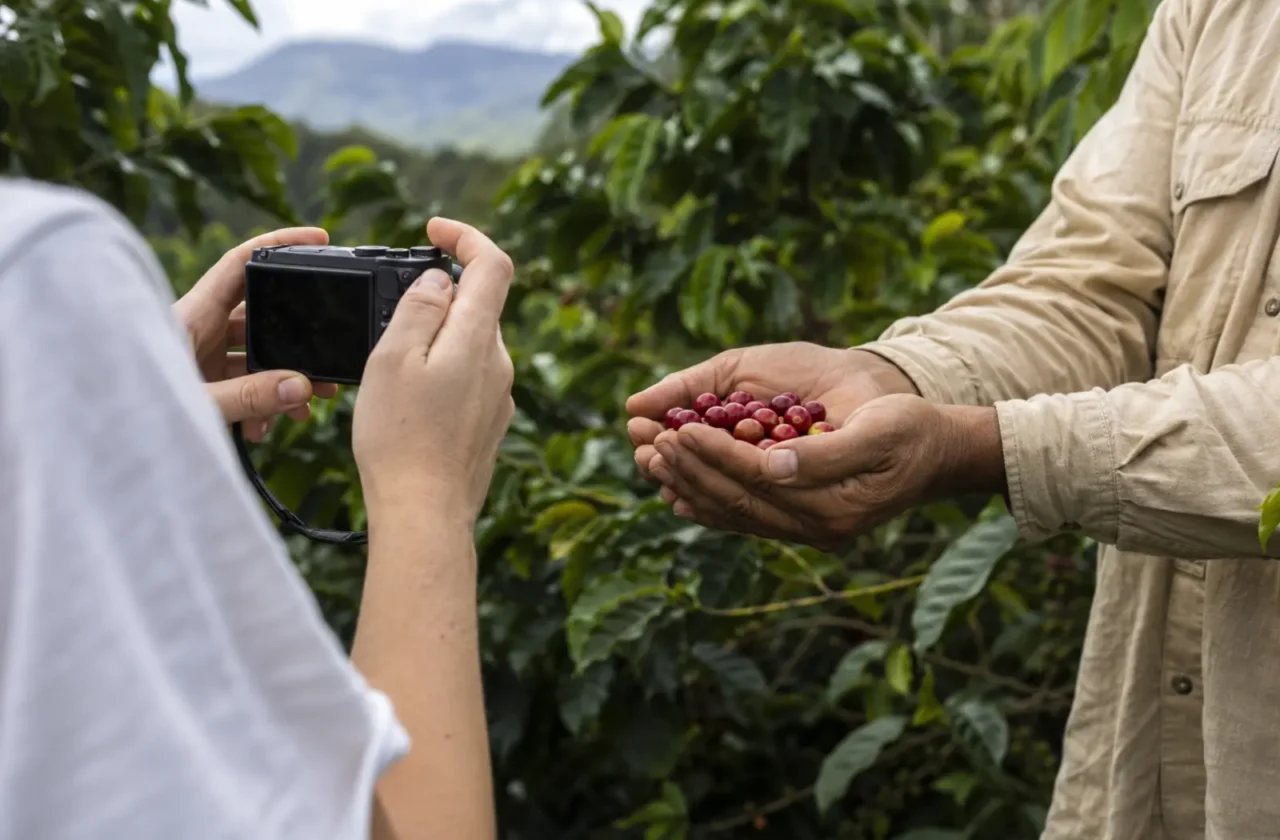
Puerto Rico coffee photography can document landscape, technique and memory, but a camera never grants automatic permission. A farm is a workplace; a café contains employees and customers; a family may not want to appear in public content. The strongest images begin by observing, asking clearly and reducing disruption. Beyond being ethical, that approach produces more honest photographs.
Ask before preparing the shot
At a farm, confirm rules while reserving. Ask whether cameras, drones, tripods or commercial use are allowed. At a café, photographing your cup is usually simple, but recognizable staff, customers and work areas require permission. Do not wait until after publishing. A negative answer does not require an argument.
Separate public space from private property
A road or marker being visible on Google Maps does not mean land is open. Never cross gates, fields or trails without a guide. Drones involve additional rules and may affect people, animals and operations. Research current requirements before traveling and accept places where flying is simply inappropriate.
Tell a story with five images
- A wide view establishing place and weather.
- A detail of a plant, tool or architecture.
- An authorized action such as pouring or grinding.
- The finished cup within its setting.
- A transition: road, plaza or your own hands taking notes.
This sequence builds narrative without photographing every face.
Use available light
Side light from a window reveals steam and texture. Outdoors, an overcast morning can be kinder than vertical sun. Avoid direct flash around customers. Move your body before moving a business’s objects, and never rearrange agricultural tools without authorization. A clean, stable phone is often enough.
Do not fake the experience
Never present a closed farm as an available tour or label a blend as coffee from one estate without confirmation. Record names correctly and link to the official business. If you received admission, product or payment, disclose the relationship. An attractive photograph does not justify a misleading description.
Share value, not aesthetics alone
Include the municipality, experience type and practical reservation or arrival advice. Do not publish private addresses. A useful caption can explain shade, distinguish cherry from roasted bean or identify the preparation shown. Credit the source when learning a fact during a tour.
Protect files and people
Back up work at the end of the day. Keep consent notes for formal collaborations. Never post close portraits of minors without guardian permission. If an identifiable person reasonably asks for removal, respond seriously. Your creative archive is not more important than the dignity of the subject.
Turn content into support
Tag accurately, direct readers to the official channel and add the place to the Passport. Explore through a legitimate tour or the map instead of improvising private access.
Find a photographable experience
Compare tours publishing visitor access, confirm photography rules and keep notes from the visit.
A workflow that reduces interruption
Before arrival, clean the lens, set the correct date and prepare a short shot list. During the visit, listen first and photograph afterward. Select a five-minute detail window instead of holding the camera throughout the explanation. The guide and group deserve attention.
For food, photograph a freshly served item and begin eating before it becomes cold. Never request a remake because an image was imperfect. When collaboration requires complex production, coordinate outside busy service and agree on compensation.
During editing, preserve believable colors and do not add cherries, mountains or people that were absent. Write captions from verified notes. A small, accurate and respectful collection carries more editorial value than hundreds of images without consent or context.
Photography questions
Do I need a professional camera?
No. A clean phone, available light and permission can produce useful content.
Can I sell the images?
Personal permission to photograph does not always include commercial use. Clarify scope in writing.
Should I send photographs to the business?
When promised, yes. Deliver a reasonable selection in the agreed format and never use delivery to demand promotion.